

Spencer Pratt DRAGS Bill Maher Out of His Liberal Bubble in Brutal Reality Check on LA’s TOTAL Collapse
“Get the naked drug addicts off the sidewalks” — Pratt turns Maher’s podcast into a gut-level indictment of California's leadership.

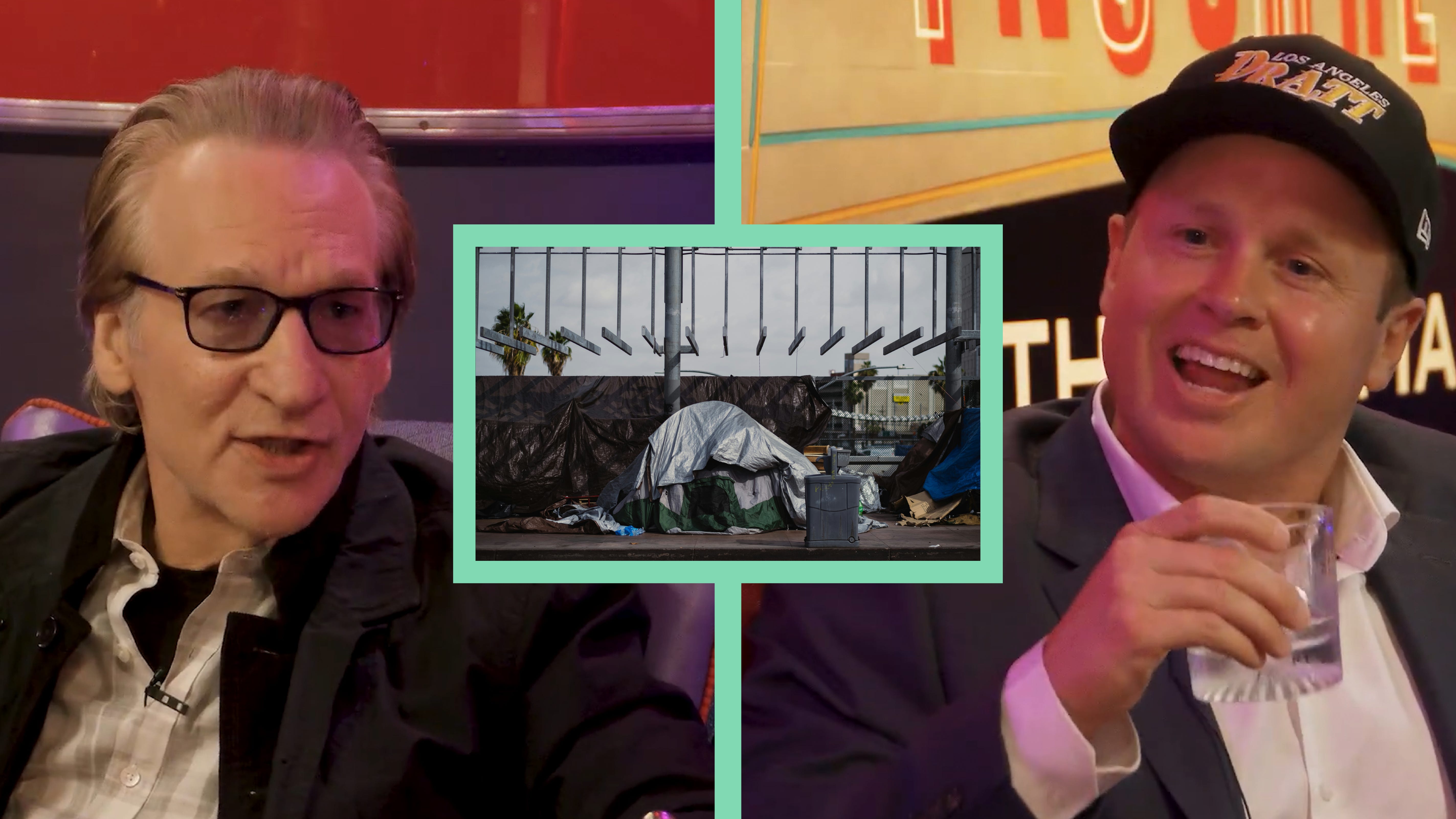
Spencer Pratt may be best known for reality television, but if you watched his appearance on Bill Maher’s Club Random podcast this morning, you saw something very different.
What started as a conversation about his long-shot campaign for mayor of Los Angeles quickly turned into a discussion about why so many ordinary Californians have lost faith in the people running their city.
And throughout the interview, Pratt kept bringing the conversation back to one central point: the political class, the elites, are obsessed with issues that matter to them, while regular people are worried about problems that are right in front of their faces.
The conversation began with the wild story of how Pratt ended up running for mayor in the first place.
According to Pratt, becoming mayor was never the goal. He’s just a man who lost his house in the Palisades fire.
SPENCER PRATT: “I never planned to be the mayor of LA.”
“I only ran to have a bigger platform to expose all the negligence, is the reason why I even ran because this person in charge burned my house down, my mom’s house, my neighbors.”
Maher pushed back immediately, arguing that Los Angeles Mayor Karen Bass deserved criticism but wasn’t personally responsible for the fires.
BILL MAHER: “Honestly, I keep hearing you say that…you’re making it a little too personal.”
“I mean, she is not a great mayor…and that is a very common view even among a lot of Democrats…”
“She fcked up some things, a lot of people fcked up some things…one person didn’t burn your house down.”
Pratt actually agreed with part of Maher’s point, but explained why the issue still feels personal to him.
SPENCER PRATT: “Agreed, agreed. But let me…one person who’s in charge of all the things that got f*cked up that burned my house down.”
“So you have to hold somebody responsible who’s in charge.”
When Maher acknowledged that leadership carries responsibility, Pratt brought the conversation back to what happened in his own neighborhood.
SPENCER PRATT: “She was in Ghana, so she obviously didn’t light the fire, so…”
“But it is personal because I have to hear my crying mom every day, the lady across from my house burned alive…that lady with parrots, you know, so it is personal.”
That exchange really set the tone for the rest of the interview.
Maher often approaches politics from an ideological perspective. Pratt kept dragging the conversation back to real-world consequences.
The same thing happened when the discussion shifted to why Pratt became a Republican.
According to Pratt, it started with death threats he was receiving from appearing on the reality TV show The Hills.
SPENCER PRATT: “So I was getting all of these death threats, so obviously my security’s like, you need to get a gun.”
“So I get a gun.”
“And then as I am a gun owner, with my wife, in Los Angeles to have a gun, you need a CCW.”
“So that’s a concealed carry weapons permit.”
“Very hard to get, and the only people that supported a CCW was the Republican Party.”
“All I cared about politically was to protect my wife and then my kids.”
“That’s my only political thing I’m connected to.”
Again, Pratt wasn’t talking about abstract political theories. After all, he had made it clear that he is not a politician.
He was talking about protecting his family.
That theme kept coming up throughout the show.
Then came the moment that changed the entire interview.
No example could have better illustrated the divide between the average Californian and the Democrat elites.
Pratt dragged Maher out of his liberal bubble and brought him back down to earth.
Maher started discussing California’s regulatory nightmare and brought up the years-long process he went through to get solar panels approved.
Pratt casually mentioned that he thought California was now taxing solar users.
Maher immediately jumped on him.
BILL MAHER: “They are?”
PRATT: “I think so.”
MAHER: “What do you mean you think so?! You have to know!”
Maher seemed genuinely annoyed that Pratt couldn’t immediately recite the details.
Pratt’s response perfectly summed up his entire campaign.
SPENCER PRATT: “I don’t need to know about solar, you know?”
“I need to focus on making sure the moms are safe and the animals are not being abused. That’s my party.”
Maher kept insisting that mayors need to understand policy details. Pratt wasn’t having it.
MAHER: “No, Spencer. I got bad news. If you’re the mayor, you are going to have to learn some of these issues more intricately.”
SPENCER PRATT: “Solar panels…we’re about three years from worrying about solar panels.”
“We need to get all of the naked drug addicts off of the sidewalks and then I can worry about solar panels.”
That was it. He had won the listeners over. That exchange probably did more to explain Pratt’s appeal than anything else he said all night.
Maher wanted to discuss policy mechanics.
Pratt wanted to discuss what people actually see when they walk outside their front door.
That’s when Pratt dropped an even bigger truth bomb and Maher didn’t know what say.
Pratt started talking about homelessness epidemic specifically in Los Angeles.
SPENCER PRATT: “Ready for the best part?”
“60% of the people in Los Angeles that are ‘experiencing homelessness’ — they’re not from California.”
“They’ve been brought here by NGOs that profit off of this homeless industrial complex, Medicaid…”
Maher immediately interrupted.
BILL MAHER: “Wait, wait, wait…”
“They’ve been brought here?”
SPENCER PRATT: “They’ve been brought here.”
BILL MAHER: “Who did that?”
PRATT: “Body brokers bring these people here.”
MAHER: “From where?”
PRATT: “All across the country.”
Maher couldn’t even fathom what he had just heard. Pratt was exposing how Los Angeles has effectively become a magnet because of the incentives built into the current system.
Whether people agree with that assessment or not, it was another example of Pratt pulling the discussion away from ideology and toward the practical consequences he believes residents are dealing with every day.
That led naturally into a conversation about socialism.
Pratt argued that many struggling voters are being sold a fantasy.
SPENCER PRATT: “I feel like people are all hyped on socialism because they’re like, everything’s so expensive! America’s failed! Give me money!”
“But what they’re forgetting is all the people that these socialists are saying they’re taking the money [from] and giving it [to], they’re going to leave.”
“And then they’re not going to have any money to take from these people to give to you.”
He pointed out how economic growth comes from encouraging businesses to expand and hire, not constantly searching for new groups to tax.
SPENCER PRATT: “I keep telling people, the way we get you money is stopping the socialism, letting the successful rich people build businesses, build restaurants, put money into your pocket because there’s more jobs. There’s more opportunity.”
Finally, the conversation turned back to the mayoral race itself.
Pratt couldn’t resist taking one more shot at Councilwoman Nithya Raman.
He told told Maher that he bodied “communist” Democrat councilwoman Raman so badly in the mayoral debate that she went from 64% to 8% odds of becoming mayor.
Maher couldn’t believe what he was hearing.
SPENCER PRATT: “After the debate, the one lady, the communist, socialist…she went from—”
MAHER: “What’s her name?”
PRATT: “Councilwoman Raman.”
“She went from 64% on Kalshi to 8%.”
“So she got bodied, she’s DONE.”
Maher was floored.
BILL MAHER: “Oh come on! After one debate?”
PRATT: “With me, yeah.”
Whether or not Pratt actually becomes mayor isn’t really the point.
What made the interview interesting was watching someone completely outside the political establishment force a conversation about issues that many Los Angeles residents care about far more than the topics that usually dominate cable news.
By the end of the podcast, Maher kept trying to pull the discussion toward policy details, ideology, and political theory.
Pratt kept pulling it back towards the things that people actually care about; crime, homelessness, public safety, government incompetence, and the consequences of failed leadership.
For better or worse, that’s why his campaign has managed to attract attention in the first place.
He’s running as a guy whose house burned down, who thinks the people in charge failed, and who is tired of hearing excuses.
Amen
Awesome summary